
AI Governance Doesn't Exist Quite Yet (But Service Designers Should Build It)
This is part of a series I’m calling 2026 & Beyond - sharing my observations and predictions of what comes next for all of us working in tech, esp. UX & PRODUCT.—
The shape of something has started forming in my brain over the past ~6 months or so. I tend to let myself marinate on these things when I feel the nagging in the back of my head. I like to let them come up to speed and clarity in the recesses of my mind before I start solidifying what they are and what they mean and how to talk about. And then after some time, I’ll have a very fermented A-HA moment 💡 And now, that a-ha moment has arrived and I’m ready to talk about it: Large-scale, company-wide AI adoption needs deliberate and thoughtful strategy and a big part of that strategy needs to be AI operational governance.
Fun, right?
As a service designer, who has been a systems thinker since the very beginning of my career (and before!), I notice when complexity isn’t being managed holistically. When systems are complex and you ignore the big picture, things go wrong fast. We’ve seen the news. I’m on LinkedIn daily. I’m chatting with other leaders and ICs in tech constantly. So many “all in on AI” bets are failing. Not because of the tech itself, exactly. But often, in exchange for speed, there’s been no strategy or guardrails or change management to roll out a clear, thoughtful AI adoption plan. Like I said in my last blog post (to quote my former manager), “We’re in the Wild West.” Everyone wants to be first to make the investment work, to plant the stake in the ground and claim victory. But, in rushing into it, most are also rushing past the thinking and planning part of the whole thing. As designers, we know there’s a better way. The planning is what steers us in the right direction, course correcting along the way.
Let's be clear about what this actually is: a service design problem. We can use AI but what does that do on its own? The part we need to spend time with is establishing frameworks, processes, and guardrails to make the most of the tool without losing cycles to rework or chasing down the source of an issue. The reason we’re seeing teams lose time to rework at this scale is because there was no QA, no oversight, no plan.
This is exactly what I meant in my last post about the soup: we’re in the soup now and the lines are blurring between our fields. Maybe I should’ve went a step further because at this point, the soup is being actively poured into a blender. 🌀 Our jobs are all changing and merging. But most companies (especially in tech) are very siloed, by nature of organizational design. This is super common, especially here in the US, but it does mean that these blurred lines can become a larger issue more quickly. Overlap becomes harder to consider or plan for when communication channels aren’t as clear between teams/departments. The lack of cross-functional governance can become a compounding issue as our responsibilities and roles start to overlap more and more.
There’s always been a risk that things could “get messy” because of this (and they have). But now with AI, those messes tend to be exponentially bigger and come on a lot faster, without a clear path to reverse mistakes, failures, or problems. We know what we want to do with AI, and why. But most companies didn’t clearly define the how. No one is really asking: How does AI use in engineering affect AI use in product? How does that affect AI use in design/UX? And vice versa? Without answering these questions, the risk skyrockets.
So what now?
I’ve been talking to a few folks about this over the past couple of months, both agency and in-house. What I’m hearing is that there aren’t a ton of dedicated AI governance-type roles. The responsibility exists, but it’s a “side of desk” consideration right now. Something you add on top of everything else you’re doing, not something you can focus on fully.
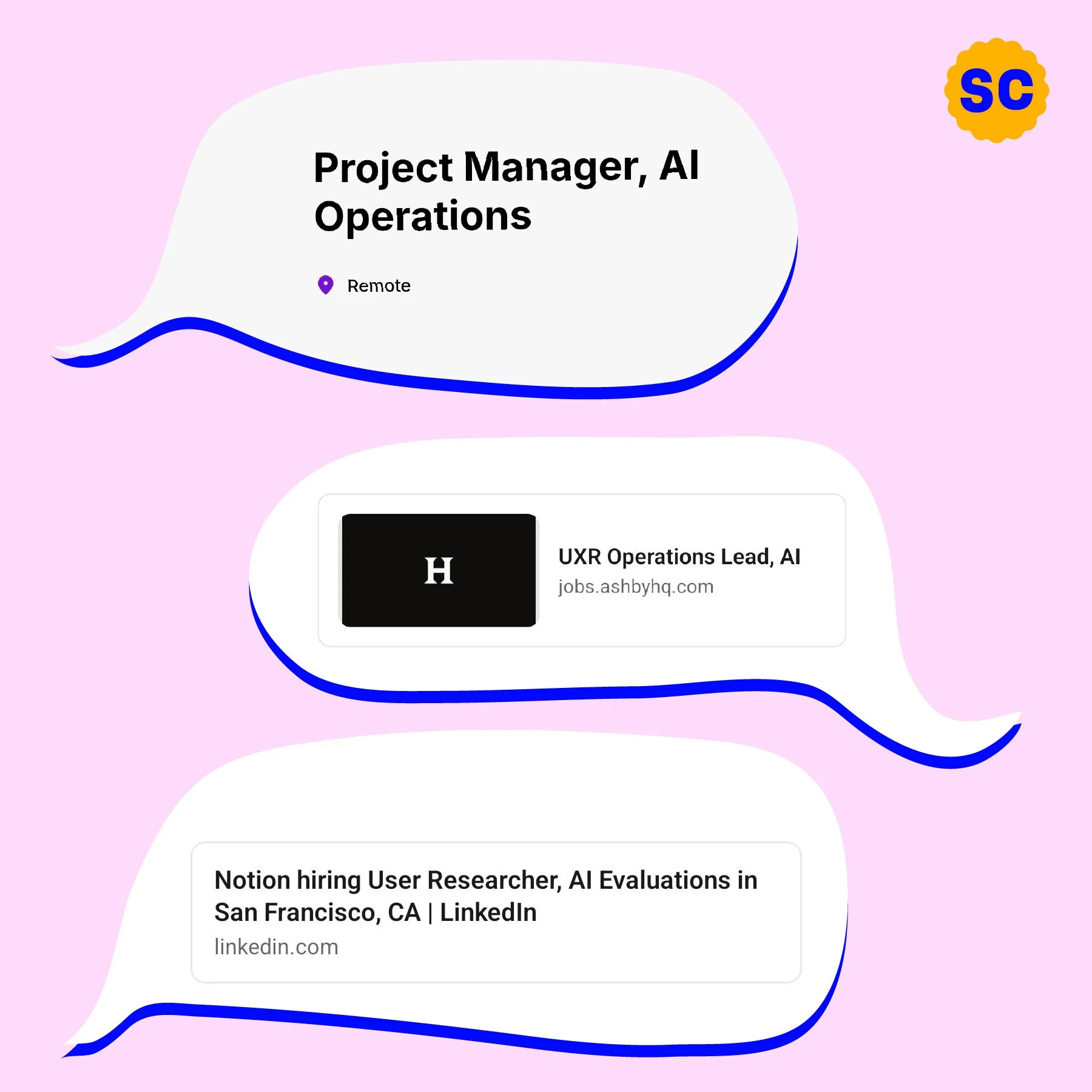
But even more interesting is that, as I’m having these convos, I saw not one, not two, but THREE AI governance type roles pop up on my LinkedIn feed in the last month. This is a signal to me. We’re talking about it. We’re noticing the need. And we’re starting to see the roles get named and put out there. To me that means it’s nascent, emerging, and desperately needed. But most companies haven’t noticed the gap. Or if they have, they haven’t figured out how to bridge it.
Bridging the gap
I'd position AI governance as its own cross-disciplinary department that works across an org to design and implement the systems needed to streamline AI use across the company as a whole, rather than individual teams. I would want to see this become a dedicated function sitting across teams. This means you have a team of individuals who focus on guardrails, workflows, expectation-setting, goal-setting, QA, process, and best practices.
And, what does this sound like? If you said service design - ding ding ding 🛎️ - you are right. This is what service design does and has always done best. Process design, development, iteration, and implementation. Service design is and has always been governance work. It’s what we’re trained to do. It’s just applying it to a specific domain. We not only design systems and processes but we also design them holistically, zooming out to the biggest picture and zooming into the smallest pieces of the puzzle. Ambiguity is our favorite place to go. Complexity is where we thrive. We bring thoughtful clarity to the party.
Because service designers work (and think) the way we do, we also understand critical practices like change management. This, to me, is one of the most important and most ignored (currently) pieces of the puzzle right now. 🧩 When it comes to introducing a completely new way of working, one that hasn’t been fully defined or developed, there needs to be change management planning in place. Phased approaches. You can’t just say, “Start using AI to work faster.” That alone means nothing, says nothing. It leads to chaos, irrevocable broken systems in its wake. If, instead, you say let’s take x amount of time to explore the tool to understand capabilities, then phase 2 is exploring ways to incorporate it into your workflows in testing environments, phase 3 is developing arguments for best practices and use cases to avoid, phase 4 is developing skills, tools, and prompts, phase 5 is testing & iterating, and so on. All with the help of a team who sees the full picture, the full company, and can help navigate and create purposeful, thoughtful, and streamlined overlapping points between teams. That to me is a recipe for success.
Moving forward
Companies need this. Maybe now, as the big bets aren't landing, they can be ready to accept it. And when you see those roles pop up, I think service designers should be hired to lead the way.
The perceived problem has been “speed” and wanting to be the first to put a stake in the ground. But with strategy missing, the speed gets throttled by rework. Skipping governance moves the cost downstream rather than saving time.
And since system “cleanliness” is more important than ever, in 2026, strategic operational governance can get a company to where it needs to be to make use of new ways of working successfully. Companies moving fast and loose with AI can’t succeed to the extent they want. But companies who take the initiative to govern it thoughtfully can.